
- All
- Product Name
- Product Keyword
- Product Model
- Product Summary
- Product Description
- Multi Field Search
Views: 3 Author: Site Editor Publish Time: 2024-10-12 Origin: Site
A brief discussion on technological measures to reduce additional losses of cast aluminum rotors in high-efficiency motors
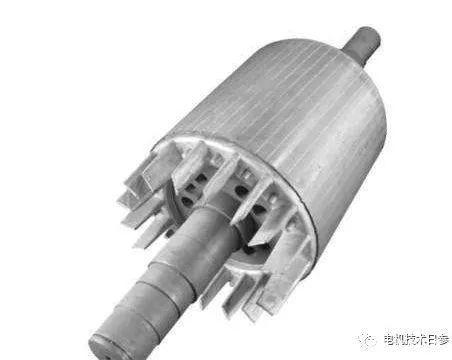
In a squirrel-cage three-phase asynchronous motor, the quality of the cast aluminum rotor directly determines the rotor loss of the motor. Based on some manufacturing and design experience, for cast copper rotors, the additional loss of the rotor is about 0.5% of the rated power. For cast aluminum rotors, The additional loss of the motor accounts for about 1% to 3% of the rated power. Therefore, under the current development trend of efficiency and energy saving, it is necessary to control the additional loss of the rotor and take some technological measures to reduce the additional loss of the motor. The additional loss of the motor rotor is There are many types. For cast aluminum and cast copper rotors, since there is no insulation between the conductor bars and the rotor slots, the leakage current between the conductor bars through the rotor teeth generates part of the rotor loss. This part of the additional loss accounts for about 1% to 2% of the rated power. %. Due to the existence of additional losses, the motor efficiency decreases and the temperature increases. In order to reduce the additional loss of the cast aluminum rotor and improve the performance and economic indicators of the motor, it is necessary to improve the quality of the cast aluminum rotor to reduce the additional loss. The following measures are taken from the process.
1. Phosphating treatment of rotor punching
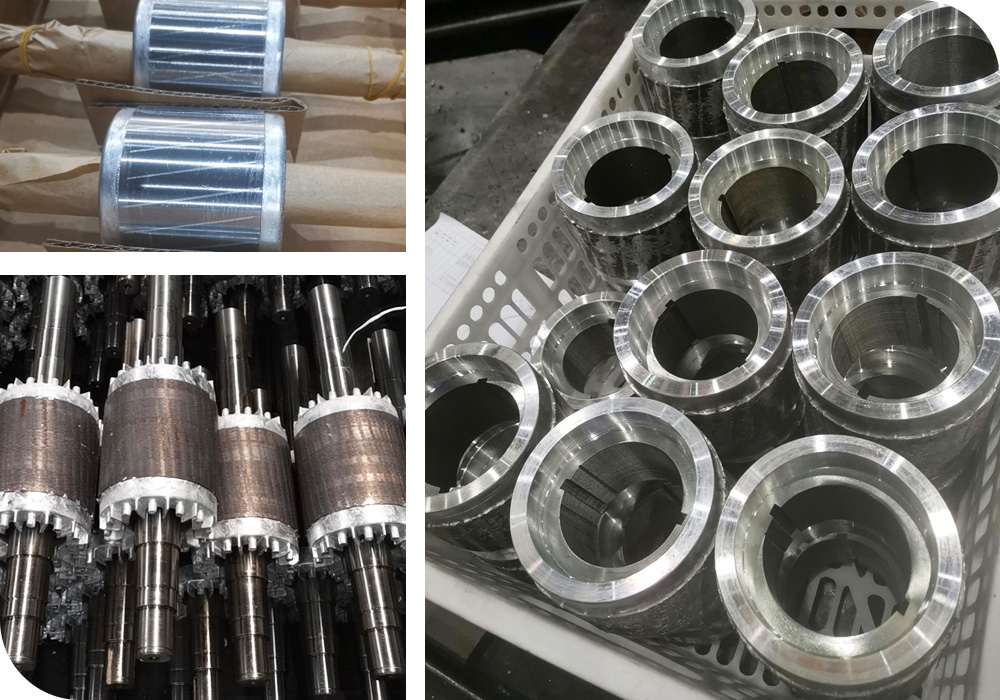
Phosphating treatment uses chemical or electrochemical methods to form a water-insoluble, corrosion-resistant phosphate film on the metal surface. This surface phosphating film has a strong bond with the metal, has high insulation properties, and can withstand high temperatures. The thickness of the phosphating film on one side of the silicon steel sheet after phosphating treatment is between 0.004~0.008mm. Under a pressure of 1~3MPa, the surface insulation resistance can reach more than 10000Ω.c㎡, and it has high withstand voltage strength ( 240V or above). The phosphating film of the electrical steel sheet can work at 450℃ for a long time, and can withstand the instantaneous high temperature of 680~720℃ in the aluminum liquid during aluminum casting and the short-term high temperature after aluminum casting. However, the temperature rise of the rotor after phosphating treatment will be affected to a certain extent due to the poor thermal conductivity of the phosphating film. However, based on the manufacturing experience, the additional loss of the rotor after phosphating treatment is reduced, but the rotor after phosphating treatment has a certain impact. The process is complex and the production cost is high, requiring professional equipment to reduce production costs. The formula and process of phosphating solution are as follows.
1.1 Normal law
By using a ferric manganese phosphate preparation, the ferric manganese phosphate preparation is a mixed block with a molecular formula of nFe (H, PO,) 2mMn (H2PO2) 2, where n and m are the ratio of iron block to manganese block, and the main component (mass fraction ): P2O3 is 46% to 52%, Mn is greater than 14%, Fe is 0.3% to 3%, and H20 is less than 19%. The ferromanganese phosphate preparation is 27~30g/L, and the temperature of the phosphating solution is 95°C. After punching and core lamination, all need to be deoiled. Toluene or carbon tetrachloride is used to clean the oil and garbage on the surface. , and then immerse it in the prepared phosphating solution for 30 to 45 minutes. After taking it out, rinse it with 3% soapy water to saponify it, and then perform acid etching (immerse it in 50% industrial hydrochloric acid for 20 seconds) , rinse with plenty of warm water to complete the phosphating treatment of the film and rotor.
1.2 Acceleration method
There are many formulas for the accelerated method. The following is the zinc oxide orthophosphate method:
Orthophosphoric acid H3PO4: 40~50g/1;
Zinc oxide ZnO: 9~10g/l;
Sodium nitrate NaNO3: 4~5g/l.
After degreasing, the workpiece is immersed in a phosphating solution above 95°C for 12 to 15 minutes. Saponification and cleaning are also required. match
The function of sodium nitrate in the formula is to promote the chemical reaction and make the phosphating film dense. Degreasing the workpiece before phosphating treatment is a key process to ensure the quality of phosphating. The method of degreasing can be cleaning with toluene or carbon tetroxide, or using chemical degreasing liquid at a temperature of 70 to 80°C.
Process for 10 to 20 minutes until all traces of oil are removed. The chemical degreaser formula is:
Water glass: 250g/l;
OP emulsifier: 5~10g/l.
The phosphating film obtained by phosphating treatment is porous and generally requires additional processing to have better corrosion resistance. The phosphating film used as insulation only needs saponification treatment. After saponification, the surface of the phosphating film is covered with an extremely thin layer of water-insoluble film composed of iron soap, manganese soap or zinc soap, which improves the phosphating effect.
The phosphating treatment of the rotor can increase the contact resistance between the conductor bar and the iron core, thereby reducing the additional loss, and thus the temperature rise and efficiency are also improved.
1.3 Simplified method
Materials and proportions: 30-40 g/L of horseradish salt; 2-4 g/L of sodium fluoride; 55-65 g/L of zinc nitrate. The temperature of the phosphating solution is 75~85℃. After the iron core is pressed and installed, it is degreased, immersed in phosphating solution for 10 to 15 minutes, taken out and saponified (rinsed with 3% soapy water), and then rinsed with plenty of warm water.
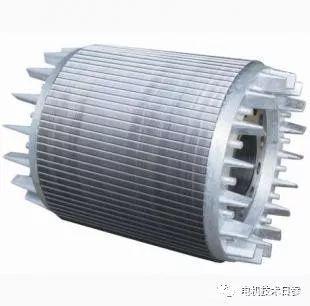
Degreasing the workpiece before phosphating treatment is a key process to ensure the quality of phosphating. The phosphating film obtained by phosphating treatment is porous and generally requires additional processing to have better corrosion resistance. The phosphating film used as insulation only needs saponification treatment. After saponification treatment, the surface of the phosphating film is covered with an extremely thin layer of water-insoluble film composed of iron soap, manganese soap or zinc soap, which improves the phosphating effect.
After the rotor is phosphated, the contact resistance increases and stray losses are reduced. According to tests by a motor factory, a 4P, 4kW asynchronous motor can reduce stray losses by 47 watts (equivalent to 37% of the original loss) after phosphating treatment, and the temperature rise and efficiency are also improved. Phosphating is more effective than oxide film treatment.

2. Film oxidation treatment
The purpose of the punching oxidation treatment is the same as the punching phosphating treatment, and the process is the same as the rotor punching phosphating treatment, except that the chemical preparations used are different, and the process flow is the same.
3. Shelling processing
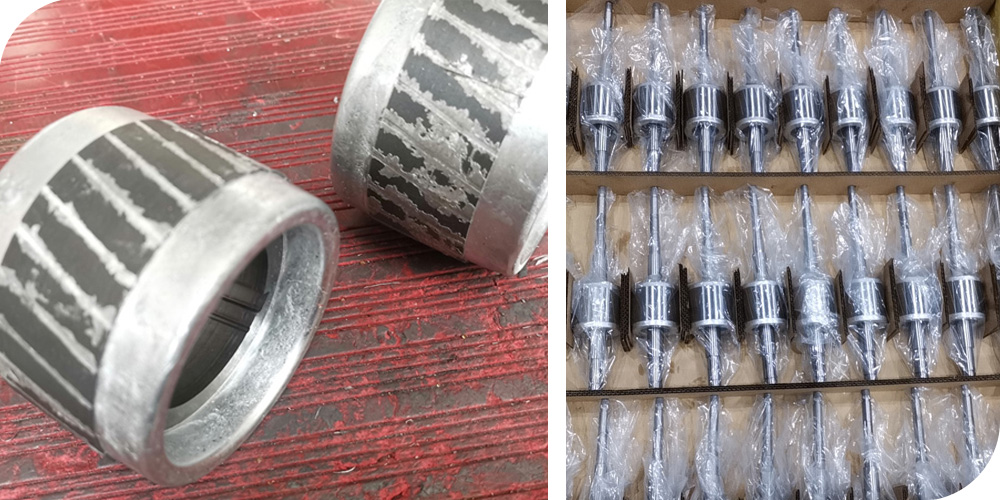
The shelling treatment takes advantage of the different expansion coefficients of aluminum and silicon steel sheets to quickly cool the heated rotor, forming a tiny gap between the core and the aluminum strip, increasing the contact resistance to reduce additional losses.
The shelling process is as follows: place the cast aluminum rotor in an annealing furnace and heat it to 540°C, keep it for 2 to 3 hours, then take it out and cool it in the air (or immerse it in water for 7 to 10 seconds). When the rotor still has 200 When the temperature reaches about ℃, take it out and use this residual heat to dry the rotor by itself.
4. Rotor surface baking
Use a blowtorch or acetylene flame to bake the surface of the iron core of the finished cast aluminum rotor. When it is heated to the point where oxidation appears and the aluminum chips in the flame-baked slot are slightly partially melted, immediately put it into soapy water and cool it rapidly. The purpose of melting is to remove burrs on the surface and notches of the iron core as well as aluminum chips stuck on it to increase contact resistance and reduce surface loss.。
5. Alkaline cleaning
After the outer circle of the cast aluminum rotor is finely turned, the surface is subjected to alkali cleaning treatment, which can corrode away the aluminum chips on the rotor surface that are pressed into the core due to the outer circle of the car, as well as the aluminum whiskers connected to the rotor slots, and increase the gap between the cage bars and the iron core. contact resistance.
The alkali cleaning method is to put the soaked rotor into 70~80% concentration of 5%.℃caustic soda solution, etching, then rinsing the rotor in hot water and drying it. Since the caustic soda has penetrated into the iron core, it is difficult to rinse it out. The corrosion time can be determined experimentally based on changes in contact resistance.
6. Rotor slot insulation treatment
The rotor slot is insulated before aluminum casting, and the insulating coating must be high temperature resistant.
7. Apply heat-resistant insulating coating
Before die-casting, the inner surface of the tank is coated or impregnated with heat-resistant paint. There are many formulas at home and abroad. The following is the heat-resistant insulating coating formula of a foreign company. The 20kW motor rotor is soaked in paint for 10 minutes, dried naturally and then die-cast, which can significantly reduce the stray loss of the motor.
Materials and proportions: 40 grams of polyethylene butanol; 35 grams of melamine resin; 25 grams of styrene monomer; 50 grams of phosphozinc acid (85%); modified ethanol (90% ethanol, 10% methanol) 650 g; i propanol 150 g.
Various process methods will have a certain effect on increasing the contact resistance of the rotor, but the degree of realization is inconsistent. Relatively speaking, after roasting the phosphated rotor core and then alkali cleaning, the contact resistance can be obtained to 30 ohm.mm.2left and right effects.
The rotor is cast aluminum and then heated to 540℃, after turning and then alkali cleaning, a sufficiently high contact resistance value can be achieved. But the rotor heats up to 540℃When the aluminum squirrel cage is used, the core may be deformed due to the decrease in mechanical strength of the aluminum squirrel cage.
For the core to be heated to 500 before pouring℃Although the contact resistance of the rotor and the oxidized punched and laminated rotor is slightly increased after alkali cleaning, the stray loss cannot be significantly reduced.
Except for phosphating treatment and thermal insulation coating, which have been adopted by some factories in production, the above methods have not yet been promoted because these processes cannot be considered as economical and convenient processing methods for batch-produced motors. A motor factory heats the rotor to 500 degrees Celsius immediately after die casting.℃left and right, and then heat-sheathed, which not only has a shelling effect, but also can use the waste heat after the rotor is cast into aluminum, which is worthy of further research.
In summary, tests have proven that taking any of the above measures will have a certain effect in reducing the additional loss of the motor. However, due to the complexity of the manufacturing process, the additional measures will significantly increase the production cost of the motor. Therefore, when carrying out any A process measure will cause an increase in costs. However, due to the advocacy and implementation of national energy conservation and emission reduction, some companies have also begun to improve the motor rotor manufacturing process from process aspects such as rotor shelling treatment, rotor surface baking and other processes. to reduce the additional losses of the rotor.
The above unofficial content only represents my personal views.

| | Address: Zhuxi Industrial Zone, Zhoutie Town, Yixing City, Jiangsu Province |
| | Tel: 0510-8750 0888 |
| | Working hours: 7*24 hours |
| | Email: Eypc@powerline.com.cn |

